Updated on 04.03.26
 The golden rule of software development goes as follows: To become a market leader, you should win the race and be the first on the market to deploy your innovative app. It might be a not-perfect MVP with bugs and a lack of functionality, but as you will be the first one, you’re more likely to gain further success. This rule makes the speed of development not just “important” but vital, especially in the first stages of your startup. At MWDN, this is the exact early-stage pattern we see: founders keep core product decisions in-house and outsource the work that slows the team down. The recommendations below are built on the practical outsourcing experience shared by Vitalii Vystavnyi (Managing Partner) and Mykhaylo Merkulov (COO). What startups usually delegate first, and what should stay close to the product owner.Outsourcing isn’t only a “get extra hands” move anymore. It’s often how startups stay fast while expectations grow (security, privacy, AI features, and 24/7 support). The smartest setups outsource repeatable work and specialist functions, but keep product ownership, user insight, and decision-making tight. Below are seven areas where delegation usually gives the biggest speed win without sacrificing control.As a newbie in software development without a fully-fledged in-house team, you might require additional assistance from skilled tech talents. The first development steps are when outsourcing and outstaffing IT vendors might come in handy. In this article, we’ve gathered seven types of tasks and projects that you, as a startup, might better consider delegating to third parties.
1. Non-automated tasks
If your team doesn’t have some functions automated, it doesn’t mean that there is not yet an RPA (robotic process automation) solution to your business needs. In 2025–2026, automation is rarely “all-or-nothing”: teams usually start with small workflows (reporting, reconciliations, document routing, support triage) and scale once they see stable ROI. The key is to automate safely, with clear logs, access control, and human fallback for edge cases.Hiring skilled developers with hands-on experience with a particular technology or industry will allow your team to apply the previously developed solutions of qualified experts in your project.MWDN tech talents have experience in process automation and creating AI solutions, so we will gladly help you get the most efficient RPA for your startup.2. Projects out of expertise
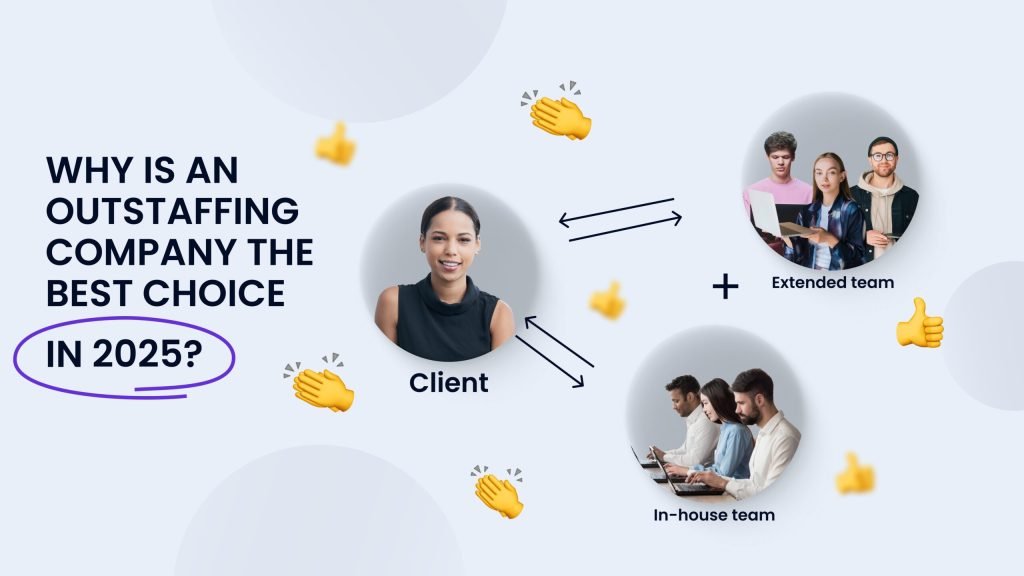
The golden rule of outsourcing states: “Do yourself all that you can do best and delegate the rest.” When the speed of the product to the market is way too important, and when you don’t have expertise in some niche or technology, it’s better to hire someone good at things you don’t know. It will be faster and, in the end, cheaper than making your in-house developer study new technologies or frameworks overnight.There’s also a point in hiring non-technical experts in sales or marketing if you need an understanding of a particular local market or industry. These are the industries in which MWDN experts have hands-on experience:| When to choose fixed-bid outsourcing? | When to choose a distributed team? |
|---|---|
| 1. If you have a detailed project roadmap and know precisely what you want to get as a final product. | 1. If you don’t yet have a final vision of a deployed project. |
| 2. If you don’t have in-house technical specialists who might benefit from tight cooperation with outsourced experts. | 2. When you have an in-house team of developers who might win from cooperation with a skilled distributed team. |
| 3. If you want to minimize your participation in the technical part of the project. | 3. If you want to keep the development process under control and manage the efficiency of your remote team. |
| 4. If you’re sure there will be no need to amend a technical task in the development process. | 4. When you’re not sure yet where the development process and marketing analysis will lead your project. |
| 5. If you can afford to pay a large sum of money, as fixed-bid outsourcing is one of the most expensive ways to receive digital services. | 5. If you have a limited budget for external assistance with digital transformation. |
| 6. If you need a one-time cooperation and there will be no necessity to maintain the project once it is released. | 6. If apart from deployment, your project requires constant maintenance and further development. |
3. Quality assurance testing
It might seem that software testing is your project’s cheapest and easiest technical task. Most often, it is. But it is also immensely crucial, especially if your project deals with clients’ personal data, healthcare, certificates, and other sensitive issues. Today, QA outsourcing often includes “shift-left” checks (tests earlier in the cycle) plus basic security testing for APIs and integrations, because defects and vulnerabilities are far cheaper to catch before release.Outsource the quality assurance of your project to get a professional assessment and outside perspective on your working processes and the maintainability of your code. Here’s what you get if you outsource QA assurance to MWDN experts:- Both manual and automated testing with the most up-to-date tools of quality assurance.
- Well-documented bug reports completed according to your requirements.
- Fully-fledged assessment of your app or website on all platforms and browsers.
- The guarantee of flawless work if you fix all bugs reported by our QA engineers.
4. Website development & management
“If you don’t exist online – you don’t exist altogether,” Zoomers say. For this reason, even the most conservative industries and businesses continue to launch their websites. The experience of Covid restrictions has also demonstrated to marketplaces and distributors the importance of having an e-commerce platform of their own. If you don’t want to use website constructors or sell your goods through e-commerce website builders like Shopify or Wix, hire a team of developers to provide you with a personalized website constructed according to your demands. For startups, the biggest “hidden” website win is performance + accessibility: fast pages, clean structure, and mobile-first UX usually improve both SEO and conversion without extra marketing spend.Make sure to choose an IT vendor that would also be your strategic partner and be able to maintain and manage your website as long as you need it.5. Web design
It is said that a person needs only seven seconds to form their first impression of another person. This “evaluation” period is even shorter when it comes to web pages. Just think of how quickly you close the tab if you see that its design and content don’t correspond to your initial Google request.Our designers help our clients with all the visual components of their software.- We help prevent your users from leaving your website,
- we make your clients fall in love with your new app,
- we create convenient and comfortable interfaces for your most complex apps,
- we understand how users behave and apply this knowledge so that you can get exactly the results you were waiting for.